Shao Stassen
I work where software meets hardware — control loops on microcontrollers, autonomous robots, and the ML systems that let them see.
Cornell ECE, Class of 2026. I led the autonomy subteam at Cornell Combat Robotics, researched vision-language and diffusion models for robot learning in the EmPRISE Lab, and now write embedded software for medical devices at Smith & Nephew.
nowfirst GPU run of the CUDA MPPI controller on a Jetson Orinupdated 2026-11-03

selected work
Things I have built
Embedded
Electrons → Instructions
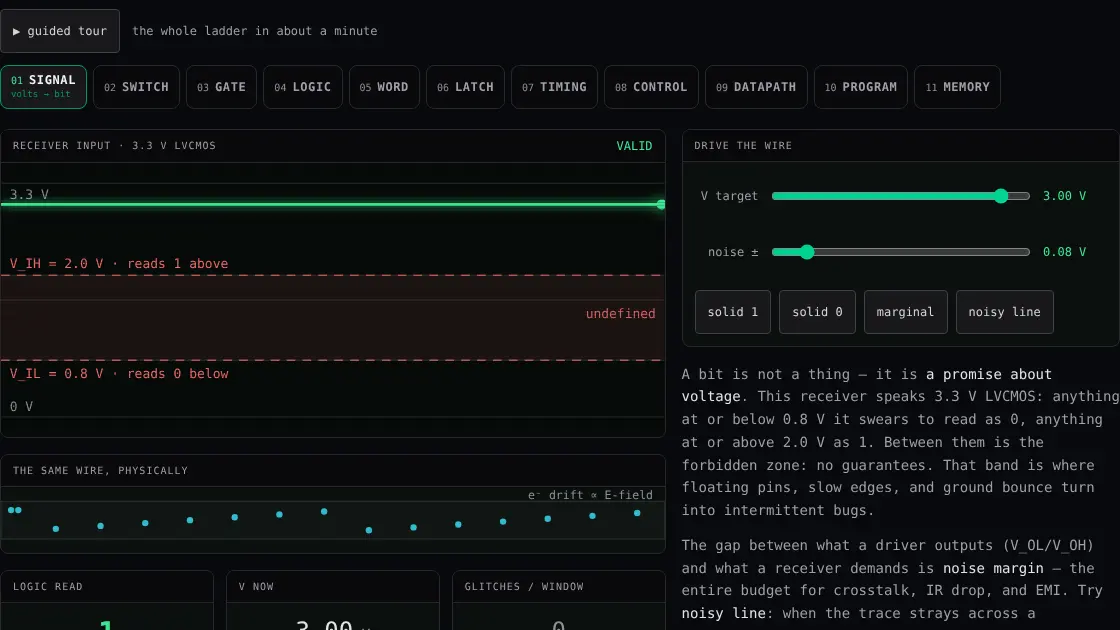
An interactive eleven-level descent from charge drifting in copper to a running program that puts a bit back on a pin — and every level can be broken on purpose.
levels: 11, each earned
case study →
Robotics · in progress
Blaze and Heat
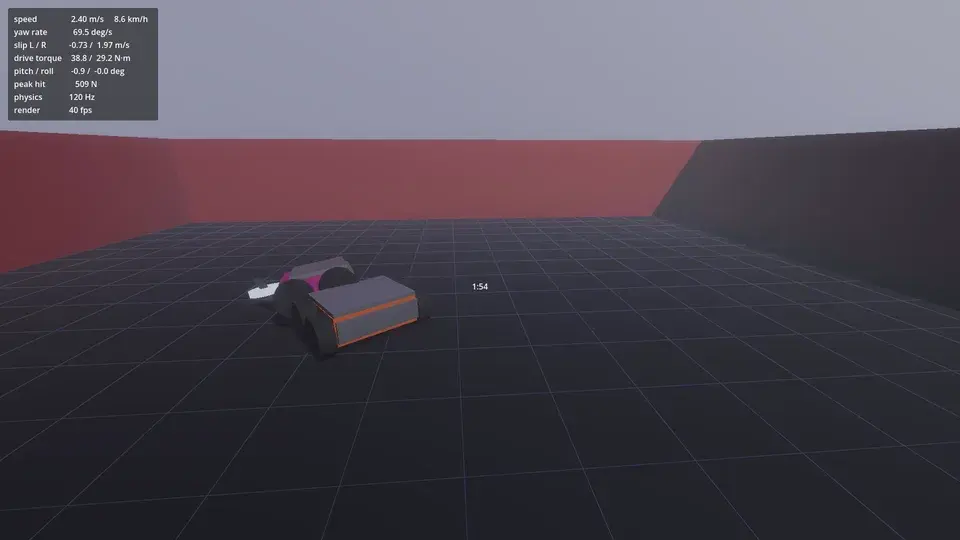
A combat-robotics game with no hit points: the spinner stores real rotational energy, and the collision that dumps it is what decides whether armour shears off.
stored blade energy: 4302 J at 1910 RPM
case study →
more work
Embedded
Bits → Messages
A serial-communication simulator whose engine also drives a real device node — the same UART runs the diagram in the browser and the /dev/ttys* you open with screen.
protocols: six, compared
Embedded · in progress
Emulation-Based Fault Injection Harness
A campaign harness that glitches bare-metal firmware in emulation to measure which countermeasures actually stop a secure-boot bypass — across two instruction sets, with every result cross-checked against a second emulator.
exhaustive search: 95.9M fault pairs
Robotics · in progress
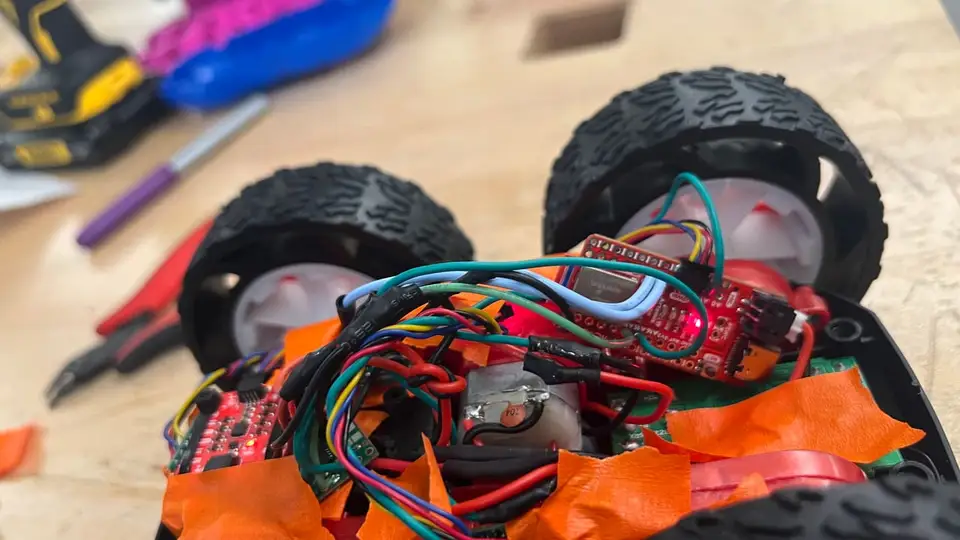
Huey: Autonomous 3 lb Combat Robot
A beetleweight combat robot that finds and engages its opponent on its own — vision-based detection feeding an orientation controller, in an environment built to destroy it.
weight class: 3 lb
Robotics · in progress
Local-First Imitation-Learning Platform
The whole imitation-learning loop on one laptop — teleoperate a manipulation task in the browser, record demonstrations, train a policy, then watch that policy take the controls — with no GPU anywhere in it.
CPU training: 14 s on one core
Systems · HPC
Parallel Sparse Matrix–Matrix Multiplication
A parallel SpGEMM built on Gustavson's algorithm, reaching ~21× speedup on a 32-core Xeon system by attacking load imbalance and memory-bound accumulation.
speedup: ~21× on 32 cores
ML · CV · in progress
SpeechLens
A fully local language-ID and transcription pipeline — faster-whisper and Silero VAD behind an explicit anti-hallucination harness — running large-v3 at 3.9× realtime on a CPU with no GPU at all.
CPU throughput: 3.9× realtime (9950X, large-v3 int8)
try it
Tune a control loop
The problem behind the robot work: a step response, an actuator that saturates, and the trade between overshoot and steady-state error. The plant is a generic first-order lag, not the robot's measured dynamics — the full write-up says so too.
Tune the loop
step response · simulated first-order plant
outputcontrol effort, saturating at ±1
- overshoot
- 1%
- settling (2%)
- 0.41 s
- steady-state err
- 0.000

field log
Plates from the notebook
Evidence, mostly. Some of it is lab work; some of it is just where I happened to be standing.


